
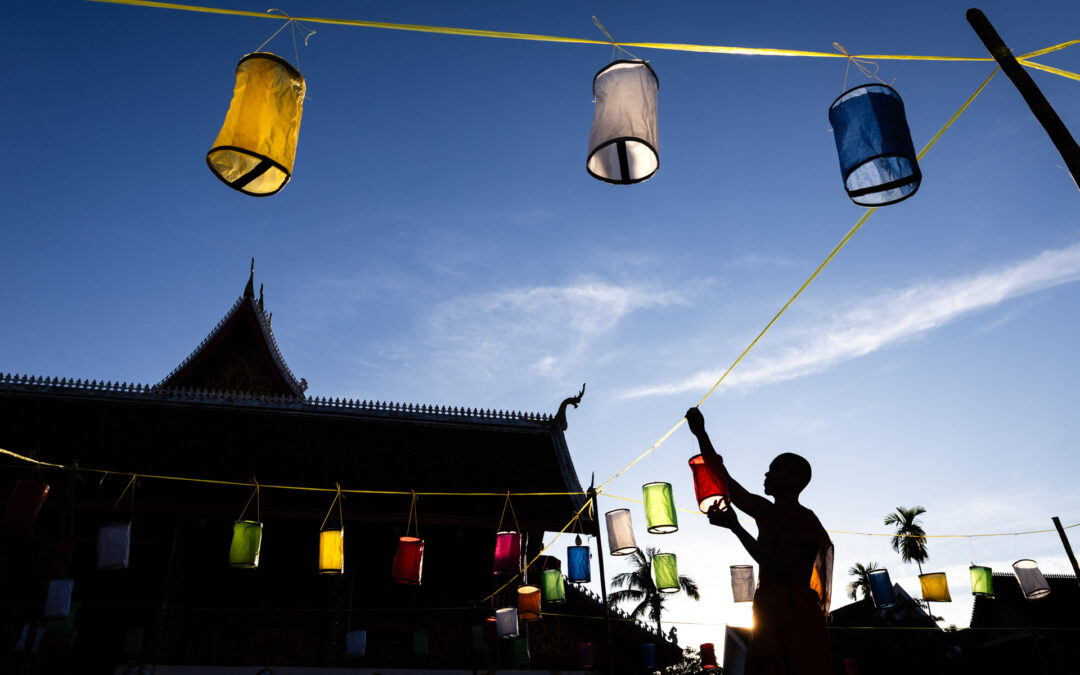
There are countless photography tours and workshops around the world today.
Some focus mainly on landscapes. Others concentrate on portraits, sometimes with organised sessions and people posing specifically for the camera.
And there is absolutely nothing wrong with that.
A posed portrait is a great way to learn about light, composition and how to work with a subject. A landscape is a wonderful opportunity to explore lines, colours, depth and perspective.
But if you already practice travel photography, perhaps you sometimes feel like going a little further.
What if your goal was no longer simply to make a beautiful portrait or a beautiful landscape, but to tell a story?
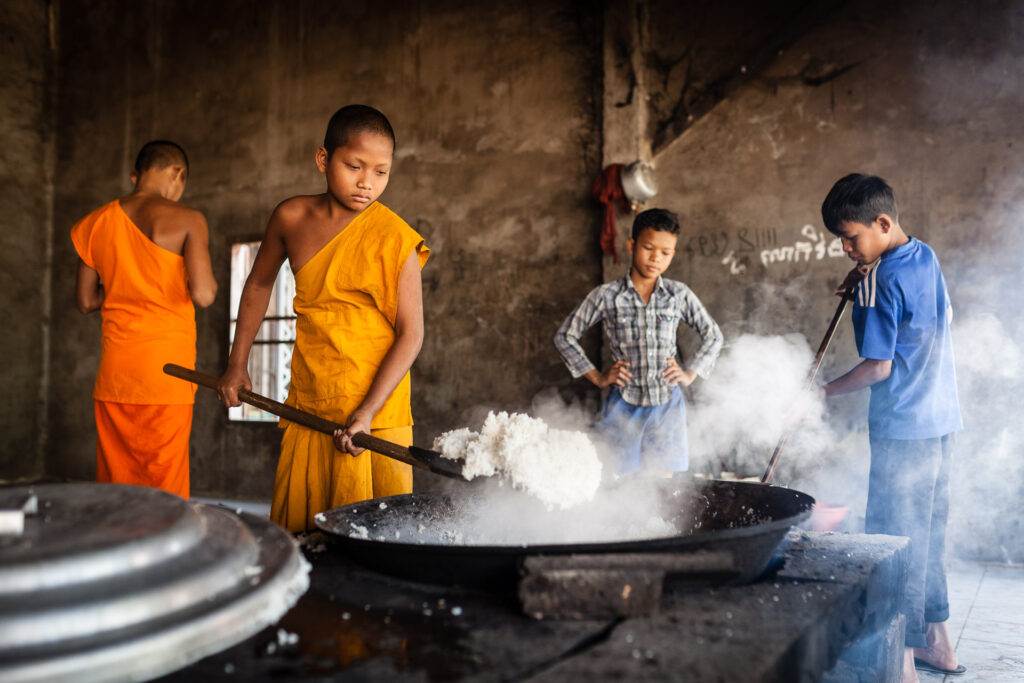
For us, that is where another kind of travel photography begins.
Look further. See differently. Tell more.
From a Beautiful Portrait to a Story Told Through Photography
A portrait can be beautiful.
Beautiful light, an expressive face, a carefully chosen background… and you have a strong image.
But imagine that this person is not simply standing in front of a beautiful backdrop.
They are in their environment.
They are working.
Cooking.
Praying.
Talking to their neighbours.
Harvesting rice.
Selling something at a market.
Working in their workshop.
Crossing a street in the middle of a crowd.
Suddenly, the portrait tells us more.
The face is still important, but the environment becomes part of the story.
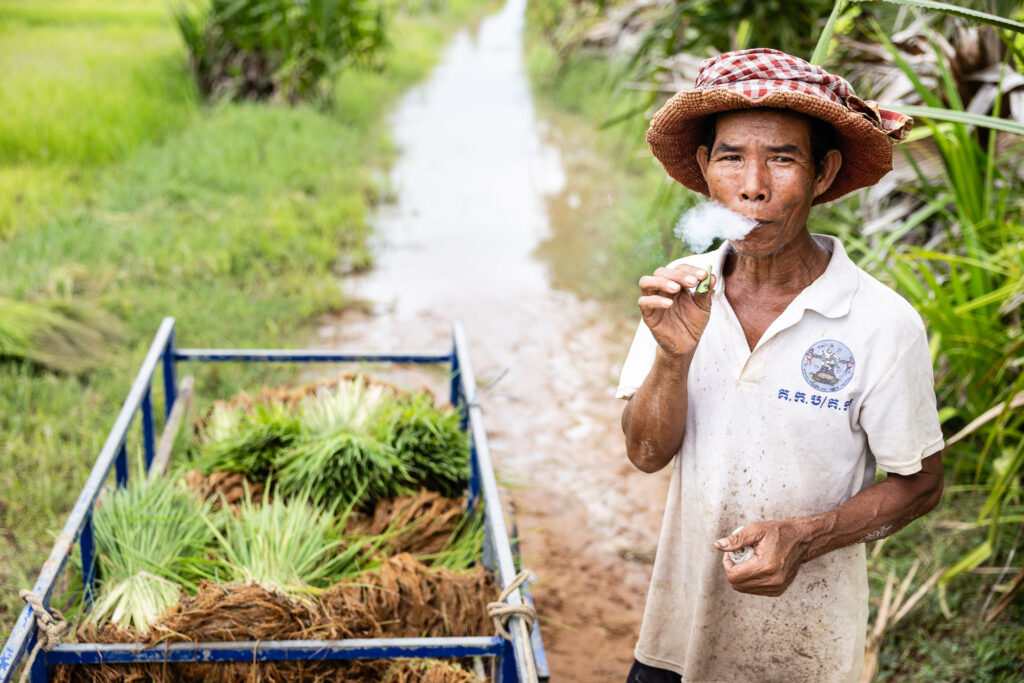
This is where environmental portraiture begins.
And it is an approach we particularly enjoy in travel photography.
It is also at the heart of what we try to do on our photography workshops in Asia: not simply pass people with a camera, but take the time to understand what is happening around us and build images that have a sense of place, personality and connection.
Environmental Portraiture: Photographing a Person and Their World
When we photograph someone, we don’t always want to isolate their face against a completely blurred background.
Instead, we often ask ourselves:
What can this person’s environment tell us about them?
A woman in her workshop tells us something about her work.
A monk in his monastery tells us something about his spiritual life.
A farmer in his rice fields tells us something about his daily life.
A family inside their home tells us something about the way they live.
A nomad beneath their yurt tells us something about their culture.
The background is therefore no longer simply an aesthetic element.
It becomes information.
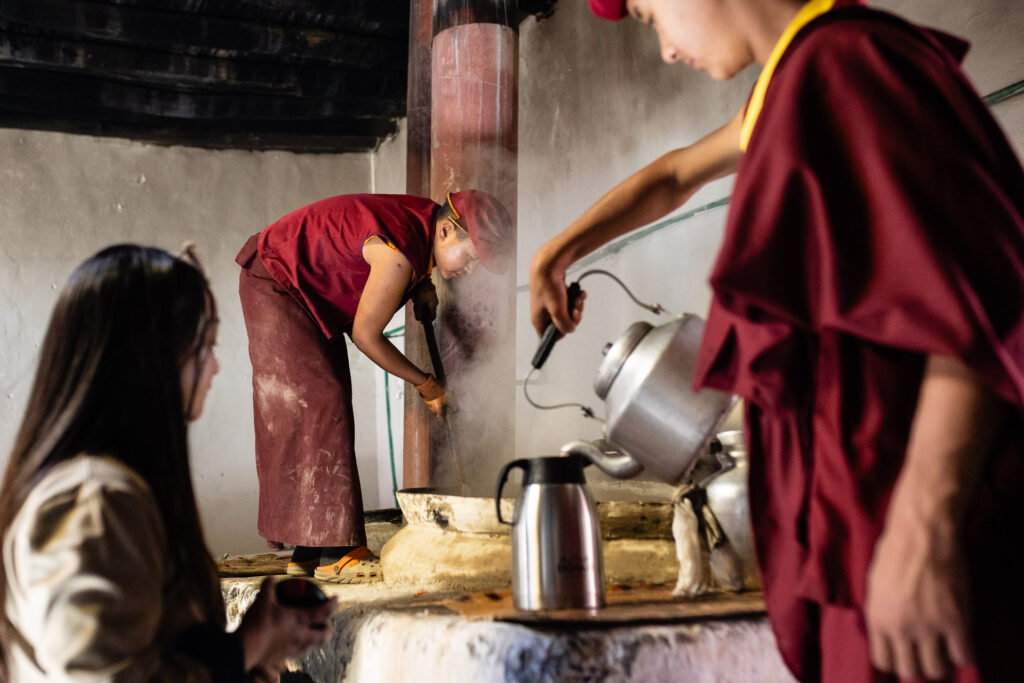
And that information gives an image greater depth.
This is particularly important when photographing people in Asia. The places where people live and work are often just as important to the story as the people themselves.
In Cambodia, for example, our Cambodia Photography Workshop combines portraits with villages, markets, monasteries, family homes, rural communities and everyday life.
The goal is not simply to collect portraits.
It is to understand the context in which those people live.
What If the Landscape Could Tell a Story Too?
The same idea applies to landscapes.
A landscape can be spectacular: a mountain, a rice field, a temple or a river at sunset.
But sometimes, all it takes is one person to completely transform the image.
A farmer working in a rice field.
A horseman crossing the mountains.
A woman walking through a village.
Children playing outside a house.
Fishermen on Tonlé Sap Lake.
Suddenly, the landscape becomes more than a beautiful backdrop.
It becomes the setting for a human story.
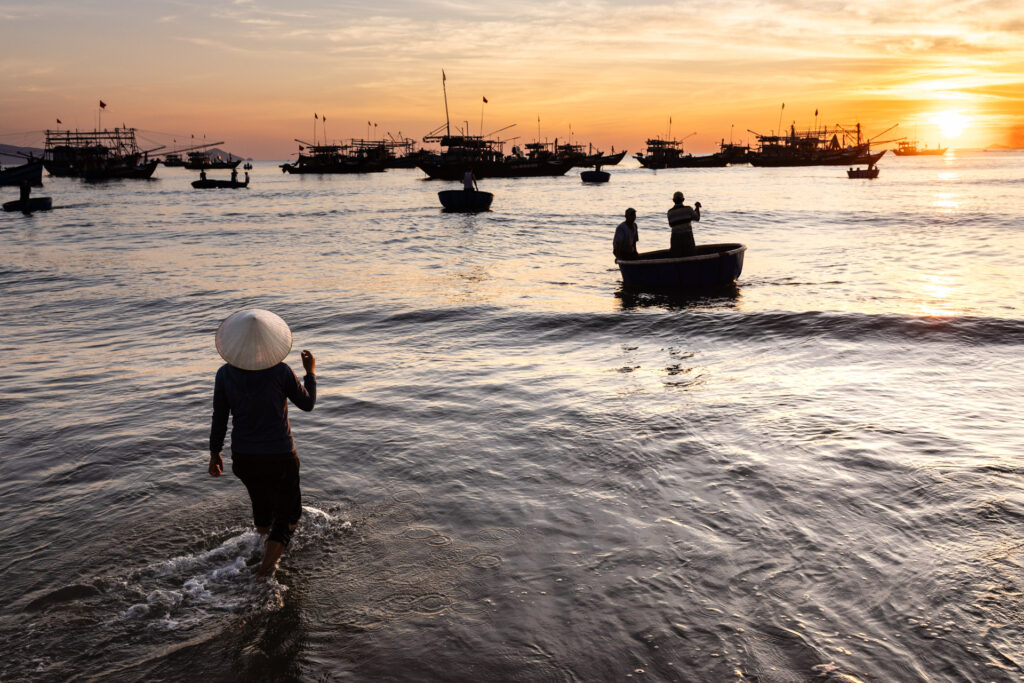
This is particularly important in places such as Kyrgyzstan and Ladakh.
The mountains are spectacular, of course.
But the real story often lies in the relationship between people and these extraordinary environments.
A nomad moving with their horses.
A family living at high altitude.
A shepherd crossing a vast valley.
A village surrounded by mountains.
The landscape becomes more meaningful when we understand the people who inhabit it.
Our Kyrgyzstan Photography Workshop is a good example of this approach: the landscape is an essential part of the experience, but so are the people, traditions and everyday life we encounter along the way.
Photograph the Moment Rather Than Asking for the Pose
This is probably one of the most important differences.
In many photographic situations, we are tempted to ask:
“Could you look at the camera?”
And sometimes, that is exactly what we should do.
But try something else too.
Don’t take the picture.
Wait.
Observe.
Let the person return to what they were doing.
And suddenly, something happens.
A gesture.
A look.
An interaction.
A smile.
A change in the light.
A moment of concentration.
This is often where the photograph is.
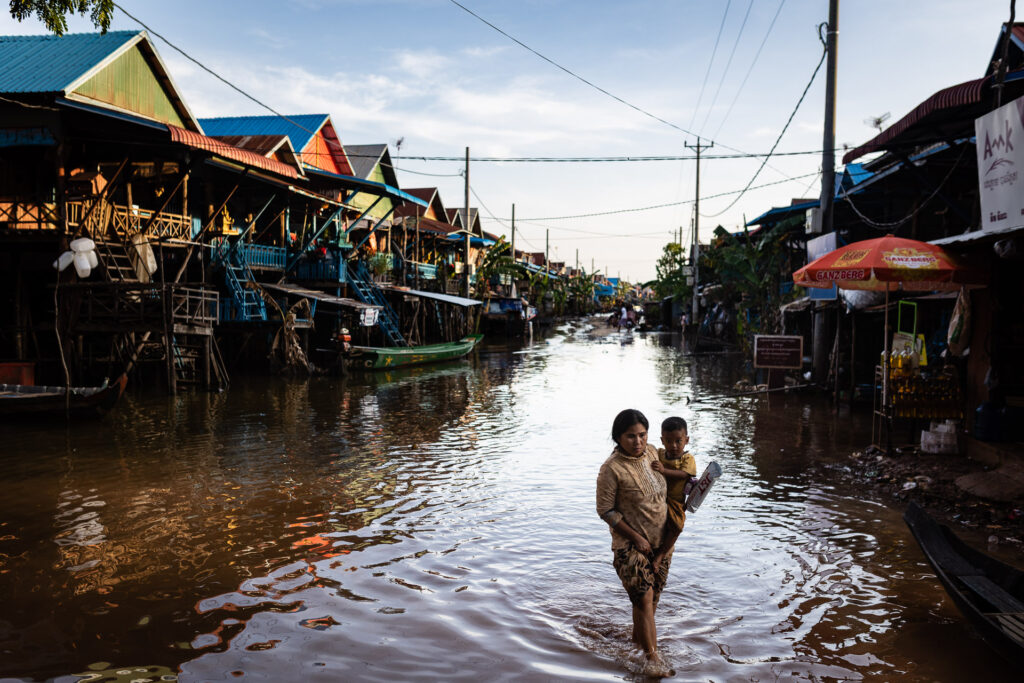
The person is no longer posing for you.
They are living.
And you are there to witness that moment.
This is one of the reasons we approach street photography as an extension of travel photography.
It is not simply about reacting quickly.
It is about learning to observe, anticipate and recognise when the different elements of a scene come together.
The Four Elements of a Strong Travel Photograph
Over the years, we have worked extensively around three essential elements:
the subject, the light and the background.
But with experience, we would now add a fourth:
the moment.
The Subject
What are you photographing?
A person, a gesture, a scene, architecture, a landscape…
Before thinking about your camera settings, you need to know what attracts you.
What is the subject of your photograph?
What made you stop?
And what do you want the viewer to notice first?
A strong photograph starts with a clear intention.
The Light
Light changes everything.
Hard light can create tension.
Soft light can create atmosphere.
Side light can reveal texture.
Backlight can transform an ordinary scene.
Light is not simply there to illuminate your subject.
It contributes to the story.
Learning to observe light, understand how it changes and anticipate what it will do is one of the most important skills you can develop as a travel photographer.
The Background
This is often what separates a good photograph from a really interesting one.
What is happening behind your subject?
Does the background add something?
Does it tell us where we are?
Does it create depth?
Does it distract?
Learning to look at the background before pressing the shutter is one of the best ways to improve your travel photography.
Sometimes moving just one metre can completely change the photograph.
The Moment
And then there is the moment.
The perfect gesture.
A person entering your composition.
A change in expression.
Two people interacting.
A ray of light hitting exactly the right place.
The moment can transform a good composition into a photograph.
This is also why documentary photography requires patience.
You cannot always control what is going to happen.
But you can learn to be ready when something interesting does.
From Tourist to Photographer: Learning to See Differently
This is ultimately one of the ideas behind our approach.
From tourist to photographer.
A tourist looks at a place.
A photographer observes.
A tourist sees a colourful market.
A photographer looks for light, background, interaction and timing.
A tourist sees a mountain.
A photographer looks for a way to show the relationship between that mountain and the people who live there.
A tourist meets someone.
A photographer tries to understand how that person fits into their environment.
The difference is not necessarily where you go.
It is how you look.
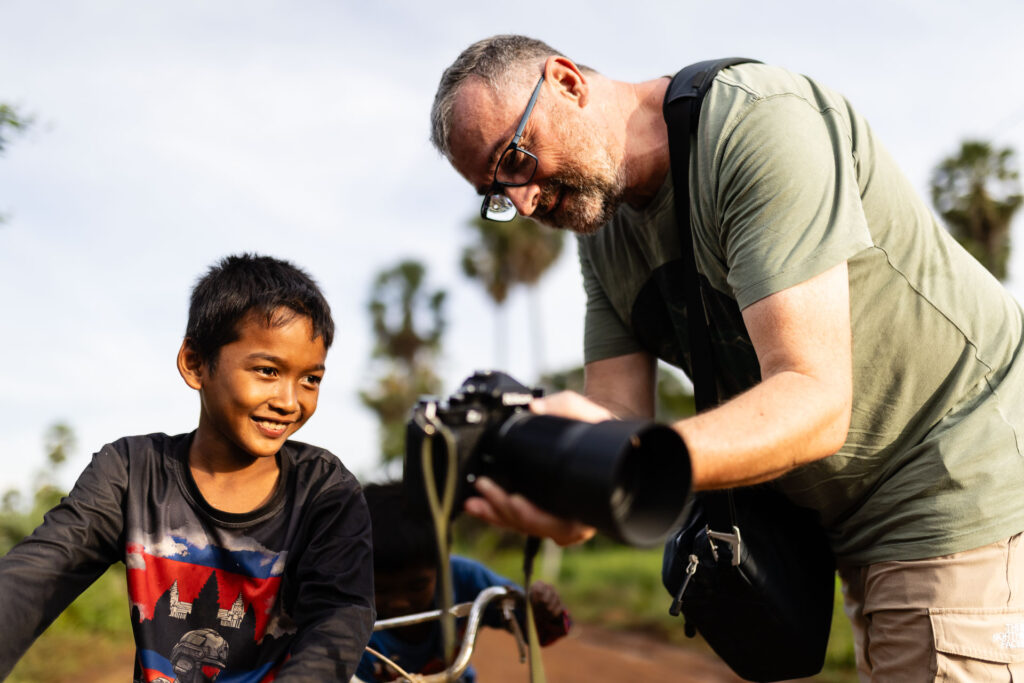
This is also why we don’t design our photography workshops simply as sightseeing itineraries.
Our photography tours in Asia are built around photographic opportunities: light, timing, access, local life, people and authentic moments.
We want you to have enough time to observe rather than simply arrive, photograph and leave.
Towards a More Documentary and Immersive Approach to Travel Photography
We believe travel photography is evolving.
Photographers don’t necessarily want to come home with nothing more than a collection of postcards.
They want to tell stories.
Create bodies of work.
Show a culture.
Document everyday life.
Capture an atmosphere.
And create photographs that would be difficult to make simply by visiting a place for a few minutes.
This is the evolution that interests us.
Our ambition is not to make you take more photographs.
It is to help you make better photographs.
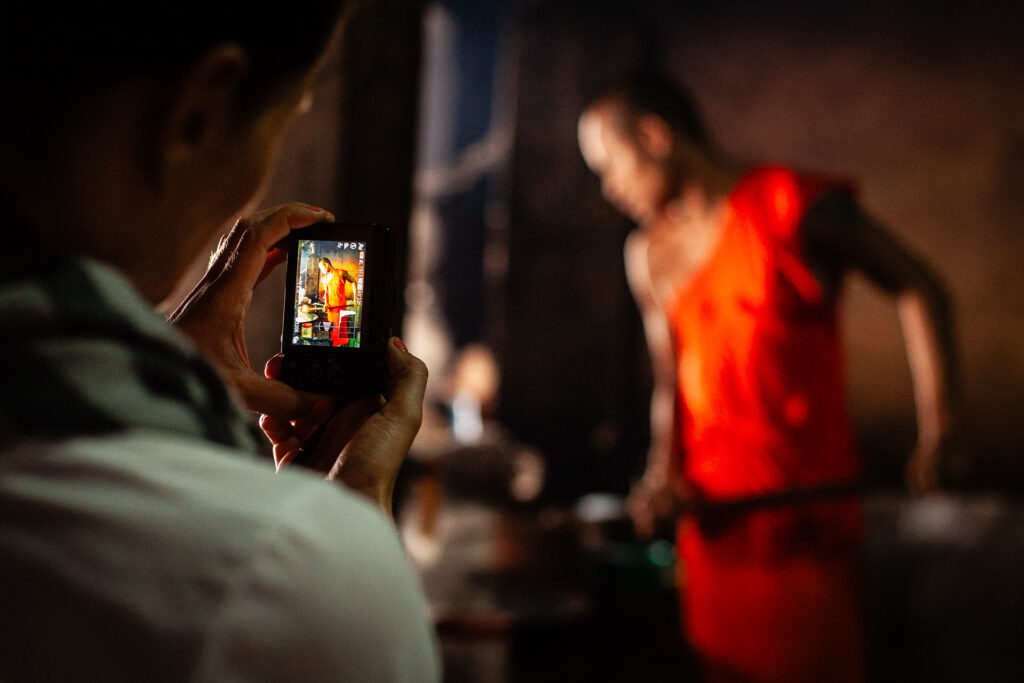
And sometimes that means taking fewer pictures.
Observing more.
Waiting.
Changing position.
Changing your background.
Looking for the light.
Anticipating.
And, above all, learning to see what is happening before it happens.
Our travel photography blog explores many of these ideas through real experiences in Cambodia, Vietnam, Kyrgyzstan, Ladakh and elsewhere across Asia.
Photography in Asia: Your Travel Becomes Your Photographic Playground
This is why our photography workshops are designed as both photographic and human experiences.
From Cambodia and Vietnam to India, Ladakh, Uzbekistan, Kyrgyzstan and Laos, every destination has its own visual language, its own light, cultures and stories.
The goal is not to give you a photographic recipe.
It is to teach you how to see.
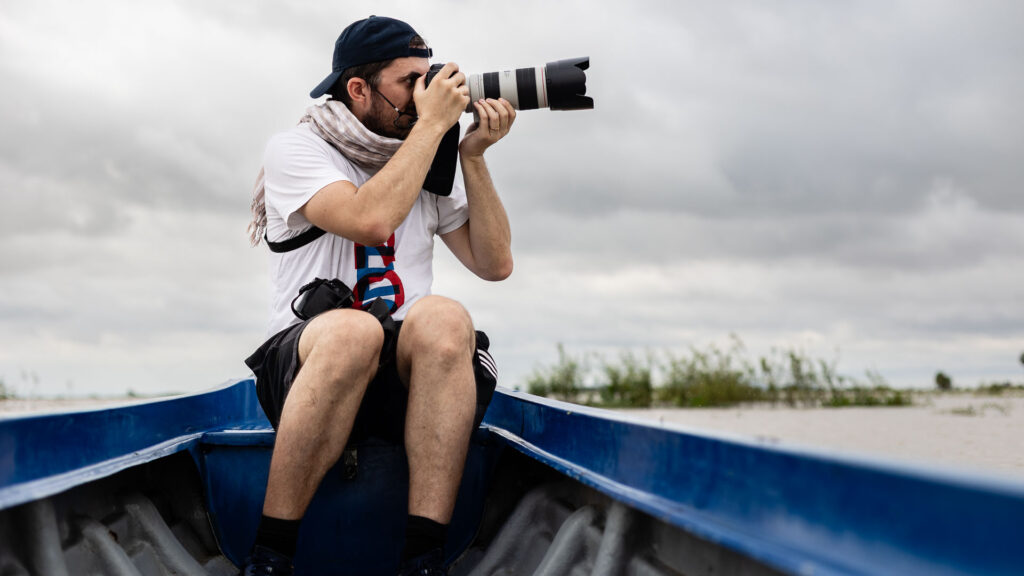
In Cambodia, a market, a monastery, a family home or a fisherman on Tonlé Sap can become a photographic situation.
Our recent Cambodia Photography Workshop: Through the People We Meet is a good example of this philosophy. Over twelve days, the photography developed naturally through markets, villages, monasteries, workshops and everyday life.
In Vietnam, mountain markets offer an exceptional opportunity to work with colour, traditional clothing, gestures, interactions and changing light. We return to some of these places not simply because they are famous, but because they continue to offer strong photographic possibilities.
You can read more about this approach in Vietnam Photo Tour: Five Photographers, Five Trajectories, One Market.
In Uzbekistan, the architecture of the Silk Road takes on another dimension when it is photographed alongside craftsmen and everyday life.
In Kyrgyzstan and Ladakh, landscapes become stories when we photograph the people who live in them.
And in Laos, ceremonies, markets, villages and festivals offer opportunities to work with movement, atmosphere and human interaction.
Every destination becomes a photographic learning environment.
Why Small Groups Matter
There is another important part of this approach: time and flexibility.
Photography does not always follow an itinerary.
The best moment may happen ten minutes before you are supposed to leave.
A market may suddenly become interesting because the light changes.
A conversation may lead to an unexpected portrait.
A local encounter may take longer than expected.
This is why we deliberately keep our photography workshops small.
Small groups give us more flexibility in the field and allow us to adapt when something interesting happens.
They also make it possible to provide individual photographic guidance without turning the experience into a classroom.
As photographers ourselves, we know that sometimes the best thing a guide can do is simply give you the space and time to make the photograph.
Photography Is Also About the People We Meet
Travel photography is ultimately about more than photographs.
The camera can be a bridge between strangers.
It gives us a reason to approach someone, start a conversation and discover something about their life.
But that also comes with responsibility.
We believe people should be photographed with respect and consideration.
The goal is not simply to collect faces.
It is to create photographs that have a sense of place, personality and connection.
Sometimes that means getting closer.
Sometimes it means stepping back.
Sometimes it means waiting.
And sometimes the best decision is to put the camera down.
That is when photography becomes more than photography.
It becomes a way of experiencing a place.
Come for the Photography. Stay for the Encounters.
This is ultimately what we want our photography workshops in Asia to offer.
Not just famous locations.
Not just a list of photographic highlights.
Not just a succession of beautiful images.
But time.
Access.
Observation.
Human encounters.
And the opportunity to develop your own way of seeing.
We don’t take photographers to Asia simply to photograph the places everyone photographs.
We want to take you deeper into the places, communities and moments that come from years of living and photographing here.
By Photographers. For Photographers.
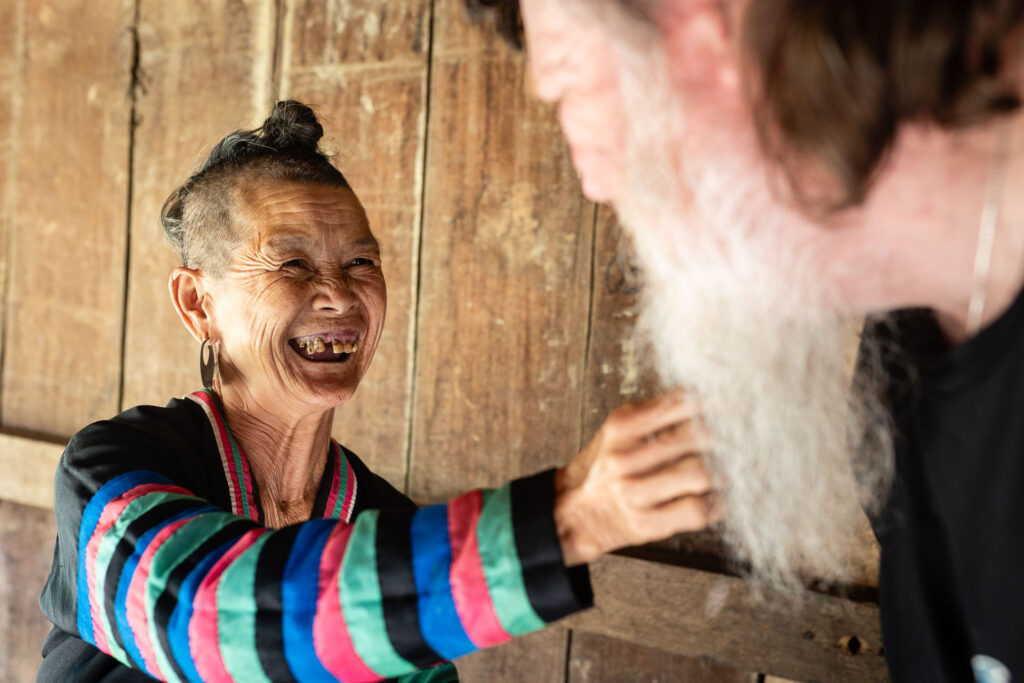
And hopefully, by the end of the journey, you will return home with more than a memory card full of images.
You will return with a collection of photographs that actually says something about the places and people you encountered.
So, Are You Ready to Go Further?
The next time you are standing in front of a person, don’t think only:
“How can I make a beautiful portrait?”
Ask yourself:
“What can I show about this person and their world?”
The next time you are standing in front of a landscape, don’t think only:
“How can I make a beautiful photograph?”
Ask yourself:
“What story can I tell here?”
And when you see an interesting scene, don’t immediately run for your camera.
Look.
Breathe.
Anticipate.
Find your light.
Your background.
Your subject.
And wait for the moment.
That may be when your photography really begins to change.
Don’t just photograph your journey.
Tell its story.
And if you want to put this approach into practice, explore our upcoming photography workshops in Asia and find the journey that fits the kind of photography you want to explore.