
Silence in the Tian Shan Mountains (A reflection in Light vs Moment in Photography)
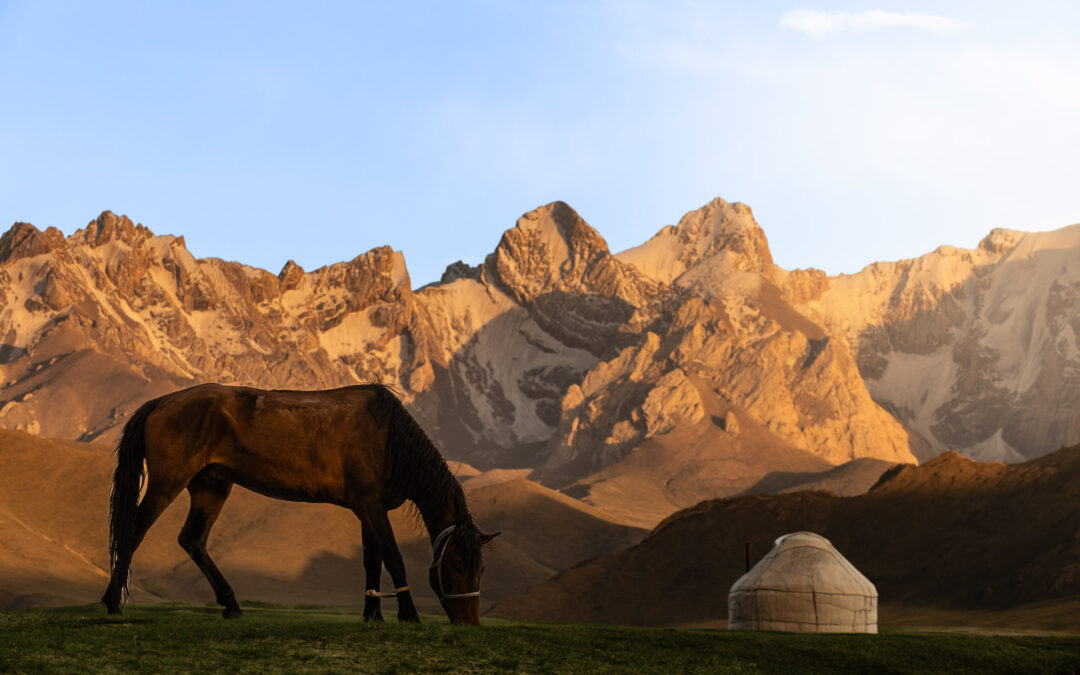
This morning, I stepped away from my camera for a moment and sat with a tea high in the mountains of Kyrgyzstan, in the heart of the Tian Shan.
No framing.
No searching for compositions.
Just a pause — not in photography as a practice, but in photography as constant attention.
There is no signal.
No internet.
No emails.
No WhatsApp.
No noise from the outside world pulling attention elsewhere.
Just silence.
Proper silence.
The kind that existed long before photographers arrived here and will remain long after we’ve packed our cameras away.
The air is cold and sharp, the kind that makes every breath feel like part of the landscape itself. Early light moves slowly across the mountains, shifting tones from deep blue to warm gold.
I sit with my tea, camera beside me, not shooting, not composing — just in that quiet state where a photographer continues to read light, space, and structure without lifting the camera.
And in that stillness, my mind drifts.
Not forward.
Back.
When Silence Turns Into a Memory
Silence has a way of doing that.
It never stays empty.
It becomes something else entirely.
And for me, it brings back another place completely.
An animal market in Uzbekistan.
Not gradually.
Instantly.
Like a frame shift in memory.
Suddenly I am no longer in the mountains.
I am back in dust, movement, and human energy compressed into a single space.
Time behaves differently there.
It doesn’t stretch — it stacks.
Everything happens at once.
Negotiations.
Laughter.
Shouting.
Movement in every direction.
As a photographer, you stop planning and start reacting instinctively.
Not because you decide to.
Because the scene demands it.
The Uzbek Animal Market: Controlled Chaos
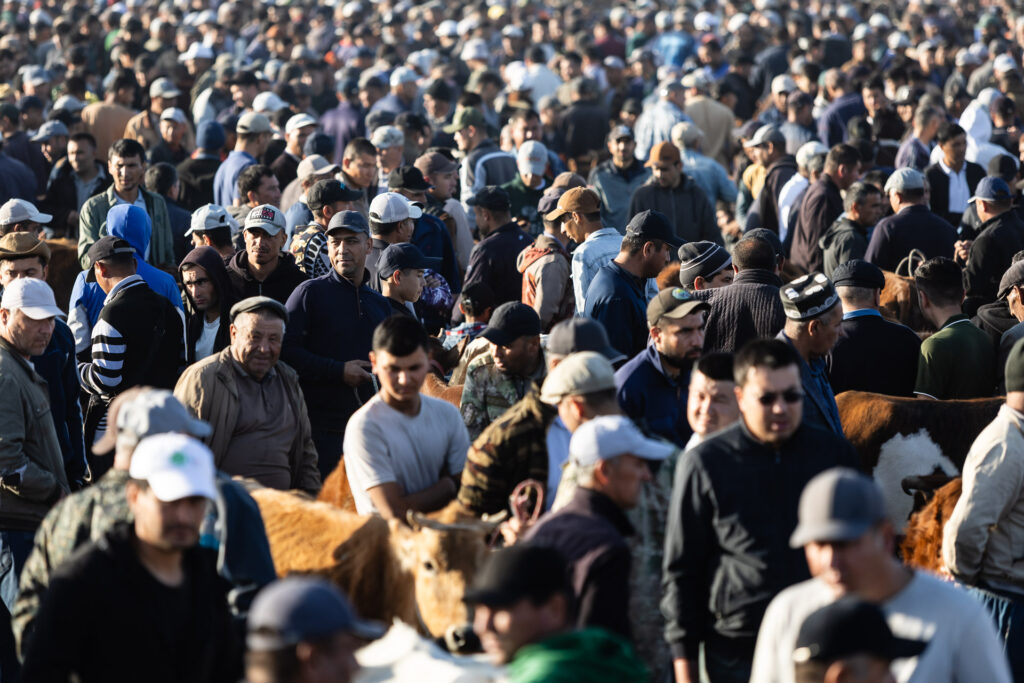
If you’ve ever photographed in an Uzbek animal market, you know the feeling.
If you haven’t, imagine entering a space where visual information arrives faster than you can process it.
Farmers negotiating prices with total conviction.
Horses being examined like serious subjects.
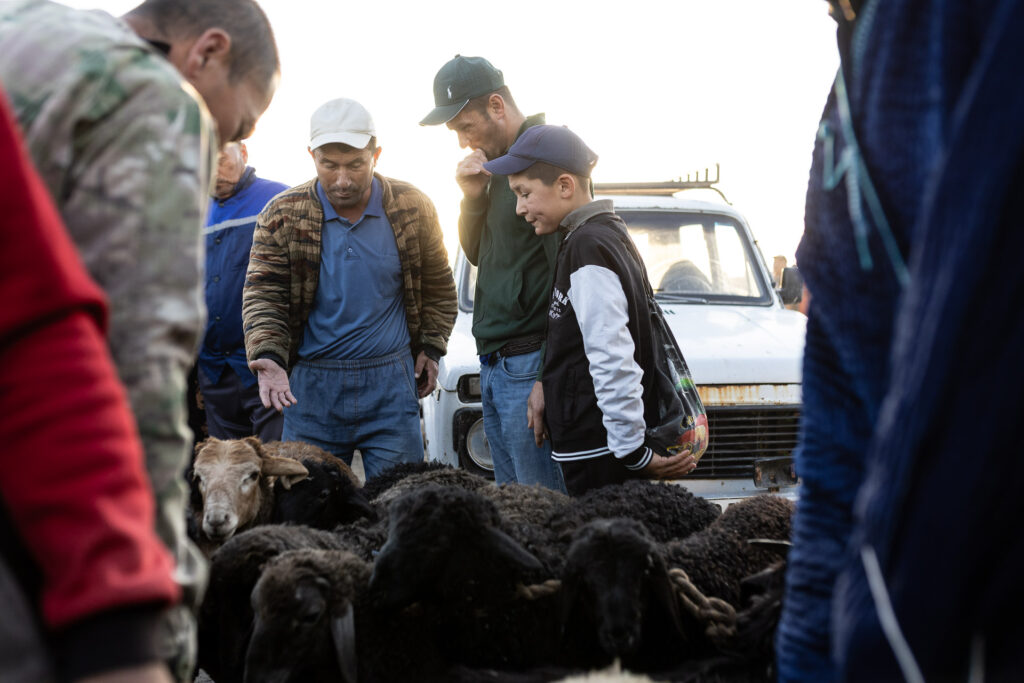
Sheep changing hands in seconds.
Children weaving through crowds with absolute ease.
Dust rising into morning light, constantly reshaping contrast and atmosphere.
Tea appearing in small glasses exactly when you stop thinking about it.
Always tea.
At first, everything feels overwhelming.
Then something shifts.
You begin to read the space like a photographer reads light.
Where tension builds.
Where interaction gathers.
Where space briefly opens before closing again.
Where something might happen — even if you don’t yet know what.
This is where travel and documentary photography becomes less about reaction and more about anticipation.
I explore this idea further in my market photography guide.
It is never about chasing moments.
It is about understanding where they are likely to appear within a living scene.
A Conversation Between Photographers
During the last Uzbekistan workshop, while working in this environment, one of my guests and I found ourselves talking about photography itself.
He is a street photographer, fully drawn to the moment.
And I understand that instinct very well.
A gesture.
A glance.
A shift in expression.
That fraction of time that exists once and disappears before it can be held.
As photographers, we both recognise it instantly when it happens.
But we approach it differently.
In places like this, moments are everywhere.
The challenge is not finding them.
It is deciding which one becomes the photograph.
Over the years, I’ve had similar conversations with photographers across all our Photography workshops.
Different photographers.
Different instincts.
Different ways of seeing.
Some start with light.
Some with people.
Some with composition.
Some with emotion.
But all of them are trying to do the same thing:
To understand the world quickly enough to frame meaning before it changes.
My Way of Seeing as a Photographer
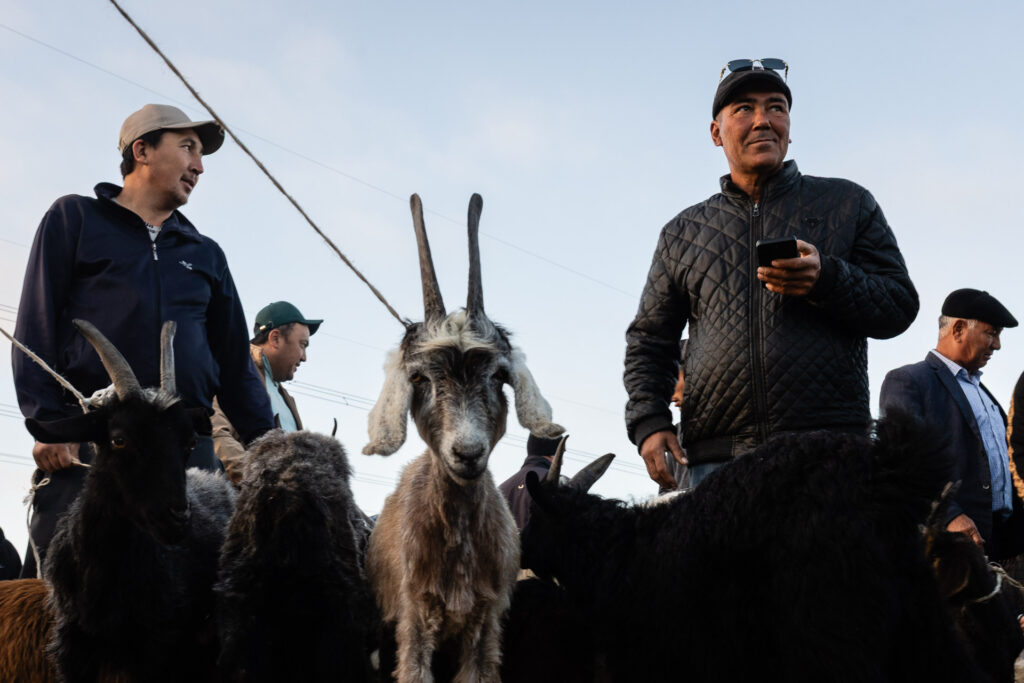
Over time, my approach to photography has become simple and structured.
When I arrive somewhere, I don’t start with people.
I start with light.
Direction.
Quality.
Mood.
Then I study the background — what supports the frame and what disturbs it.
Then I identify the subject.
And finally, I wait for the moment.
1. Light
2. Background
3. Subject
4. Moment
The moment is always the spark.
But never the starting point.
I often tell guests I prefer to build the frame before the story enters it.
Not to control photography.
But to understand it deeply enough that when something happens, it becomes clear, readable, and intentional.
This approach has been shaped by years of photographing across Cambodia and Asia, where light and human presence constantly interact inside the frame.
From Angkor to Central Asia
In places like Angkor Wat, light moves slowly, almost like a slow unfolding scene.
In Central Asian markets, everything happens fast, demanding instinct and anticipation.
In Southeast Asia, chaos and rhythm coexist constantly inside the frame.
Each place teaches something different about photography.
But all of them return to the same idea.
Photography is not only about what you see.
It is about how quickly you understand what is unfolding in front of you.
Back in the Tian Shan
Sitting again in the mountains of Kyrgyzstan, I have everything a landscape photographer could ask for.
Perfect light.
A vast background.
A sense of scale that no lens fully contains.
And yet I am not photographing.
Not framing.
Not composing.
Just sitting with a tea, watching the light move across the peaks.
The mountains shift slowly through different tones — blue, gold, shadow — as clouds pass without urgency.
It is one of those rare moments where nothing is required from the scene, and nothing is required from me either.
Final Reflection: Light vs Moment in Photography
Maybe this is what years of photographing across Kyrgyzstan, Uzbekistan, and Cambodia eventually teach you.
Light gives structure.
Background gives clarity.
Subject gives meaning.
Moment gives life.
And every photographer starts somewhere different.
Some chase light through landscapes.
Some chase moments through streets.
Some chase order inside chaos.
Some chase chaos inside order.
None of it is a rule.
It is instinct.
And sometimes, when you are sitting alone in the mountains with your camera beside you, a tea slowly cooling, and no need to photograph at all, you realise something very simple:
You are still a photographer — even when your tea is cold!