
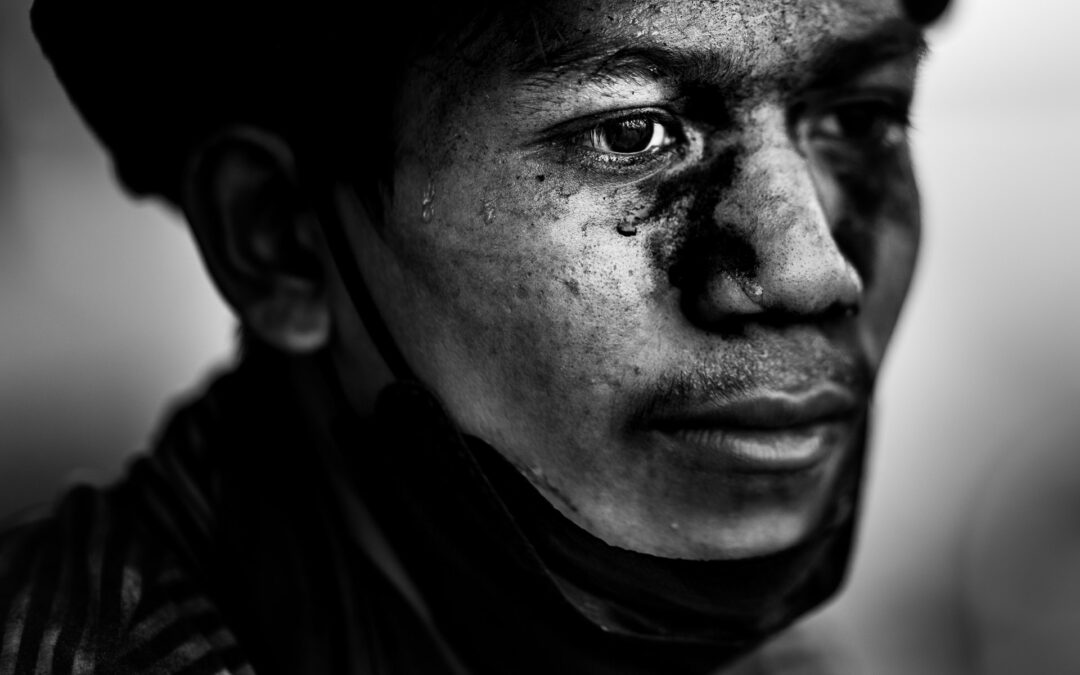
Travel photography is not only about beautiful places and dramatic light.
At its most powerful, it is about telling human stories with meaning.
On our travel photography workshops, we don’t focus on “only” collecting images. We teach photographers how to build visual narratives — stories that editors want to publish and viewers remember. One of the projects we can use as an example is Black Tears, a documentary photo essay about people extracting charcoal in Cambodia.
In this article, we explain step by step how to create a strong photo story, answering the essential questions every visual narrative must address — while thinking like a magazine photographer and working with intention, light, and composition.
Photography as Visual Storytelling
Every compelling photographic story answers a simple set of questions — without words:
- Where are they?
- Who are they?
- What are they doing?
- How do they do it?
- Why does it matter?
- How does the story end?
Instead of explaining these answers with text, we let images do the work.
This structure is the foundation of documentary and editorial photography — and the core of what we often teach during our photography workshops.
Step 1: Where Are They? (The Establishing Shot)
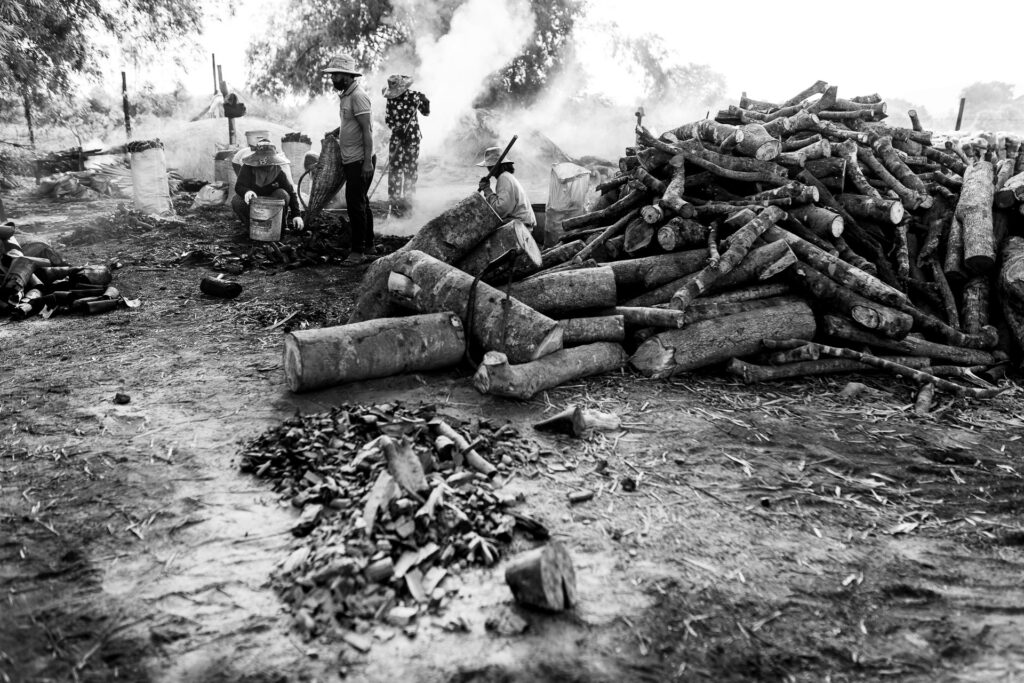
Every story begins with context.
The first image must clearly show where the story takes place. In Black Tears, the opening photograph is a wide view of the charcoal extraction site in Cambodia:
- Smoke rising from underground pits
- Dark soil covering the landscape
- Small human figures surrounded by harsh conditions
This image immediately situates the viewer and sets the emotional tone.
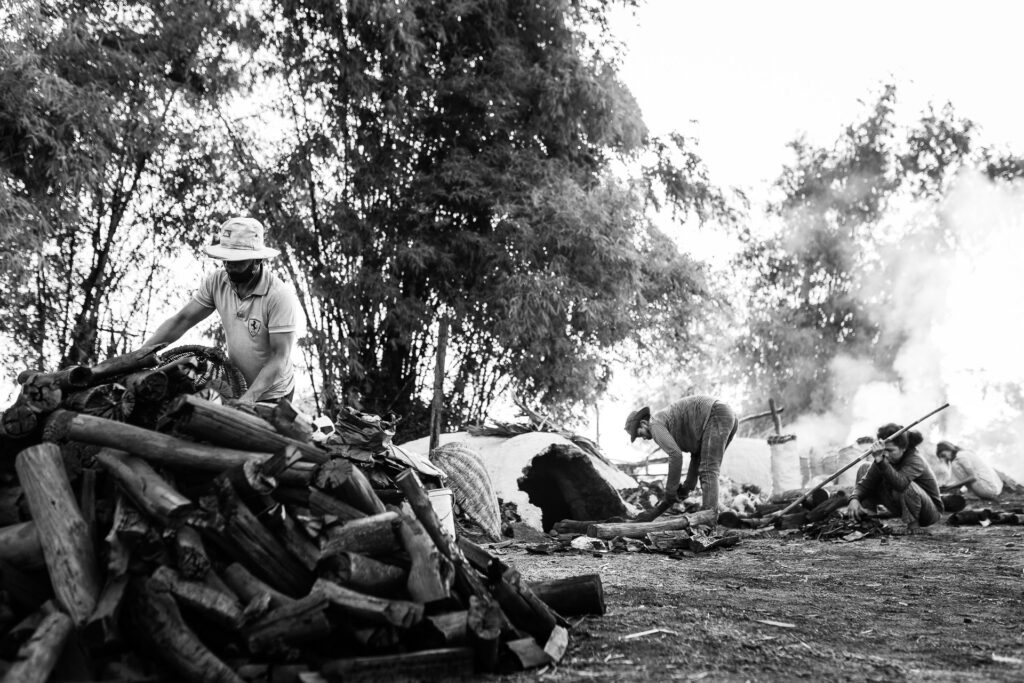
Tips for strong establishing shots:
- Shoot wide and show the environment
- Use light to create atmosphere
- Include people to show scale
- Always shoot both horizontal and vertical images for magazine layouts
This image is the visual “opening sentence” of your story.
Step 2: Who Are They? (The Portrait)
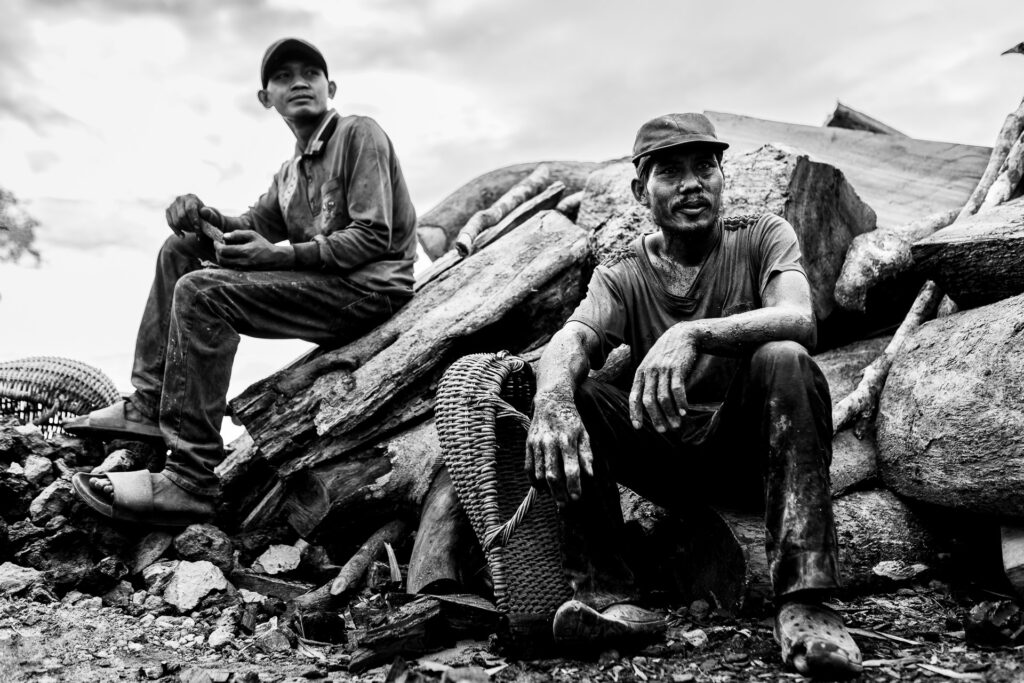
Once the place is established, the story becomes human.
Portraits create emotional connection. In Black Tears, close portraits reveal faces marked by soot, tired eyes, and quiet dignity. These images invite the viewer to slow down and engage with the people behind the labor.
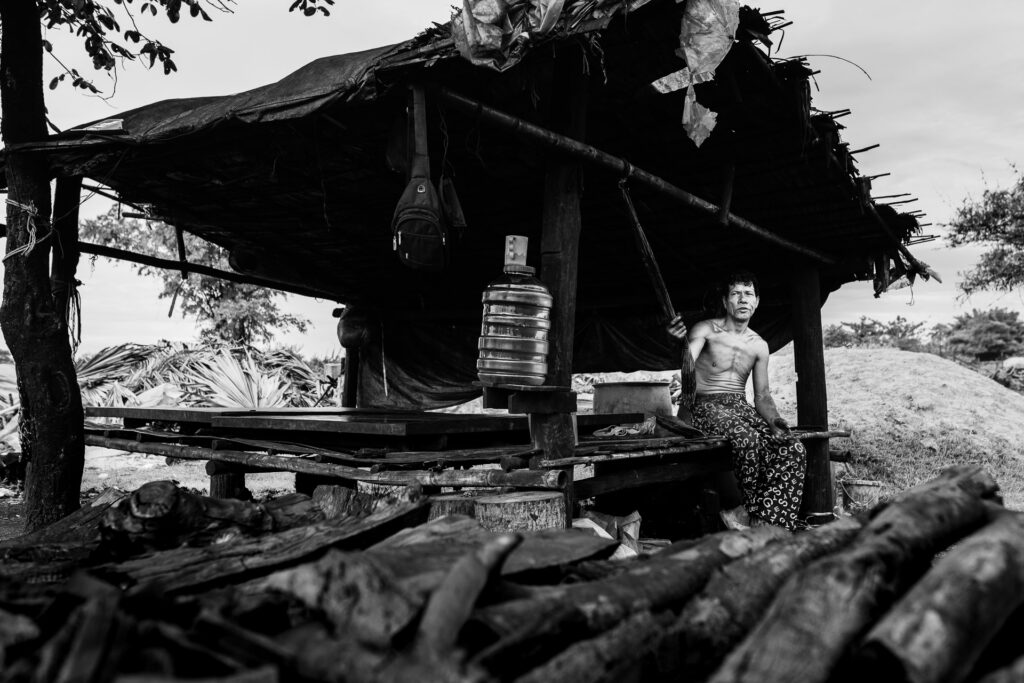
Tips for storytelling portraits:
- Keep backgrounds simple
- Use soft or directional light
- Take time to build trust
- Capture both horizontal and vertical frames
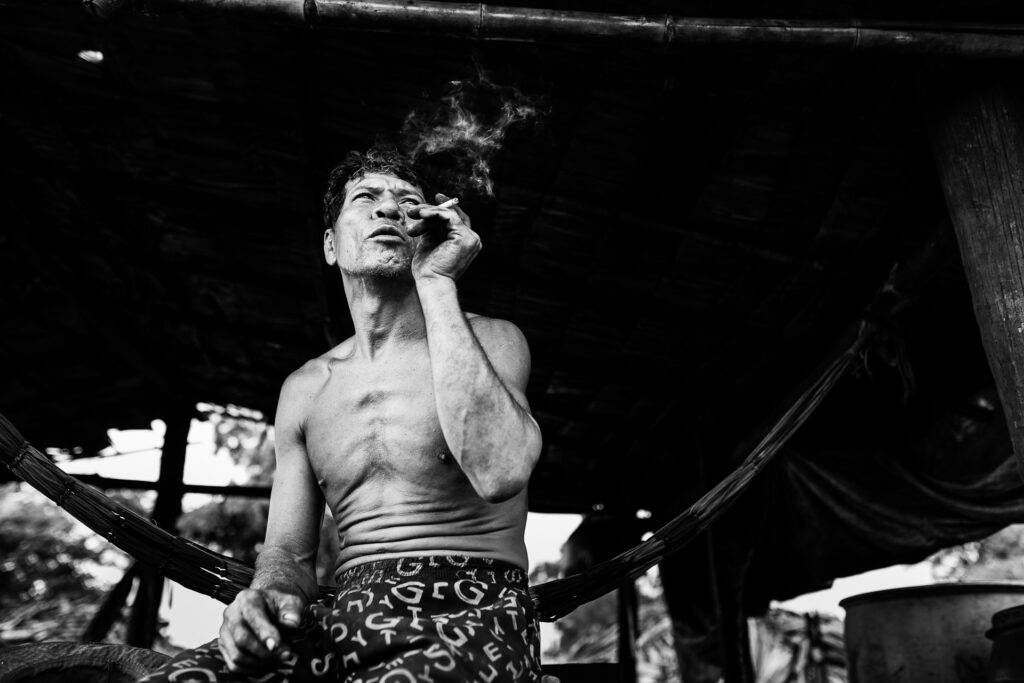
Portraits often become the emotional anchor of a photo essay.
Step 3: What Are They Doing? (The Action Shot)
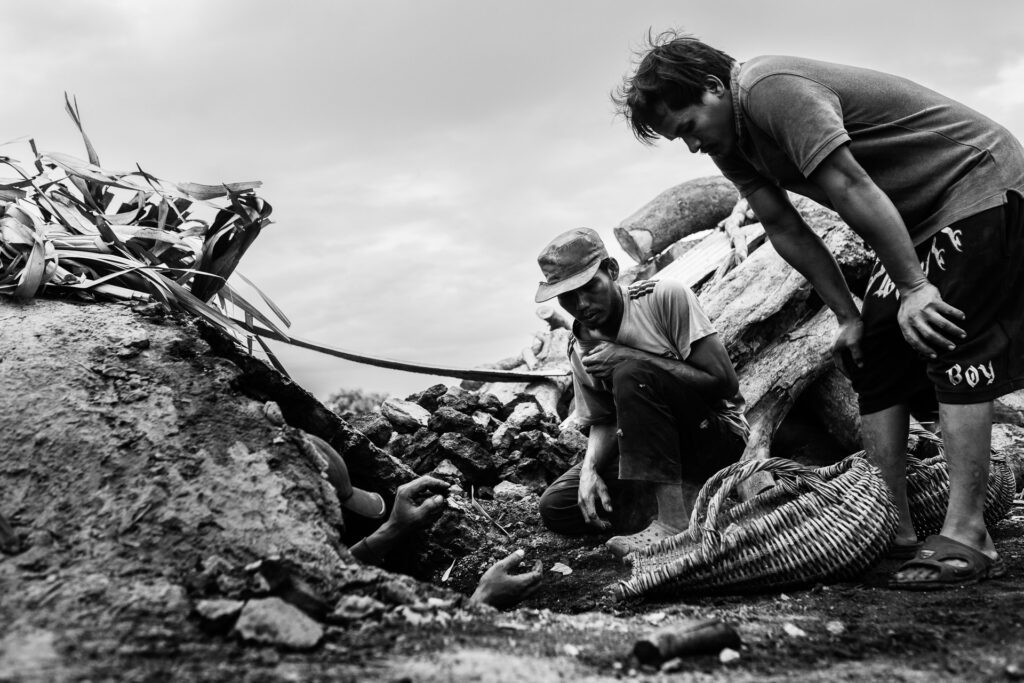
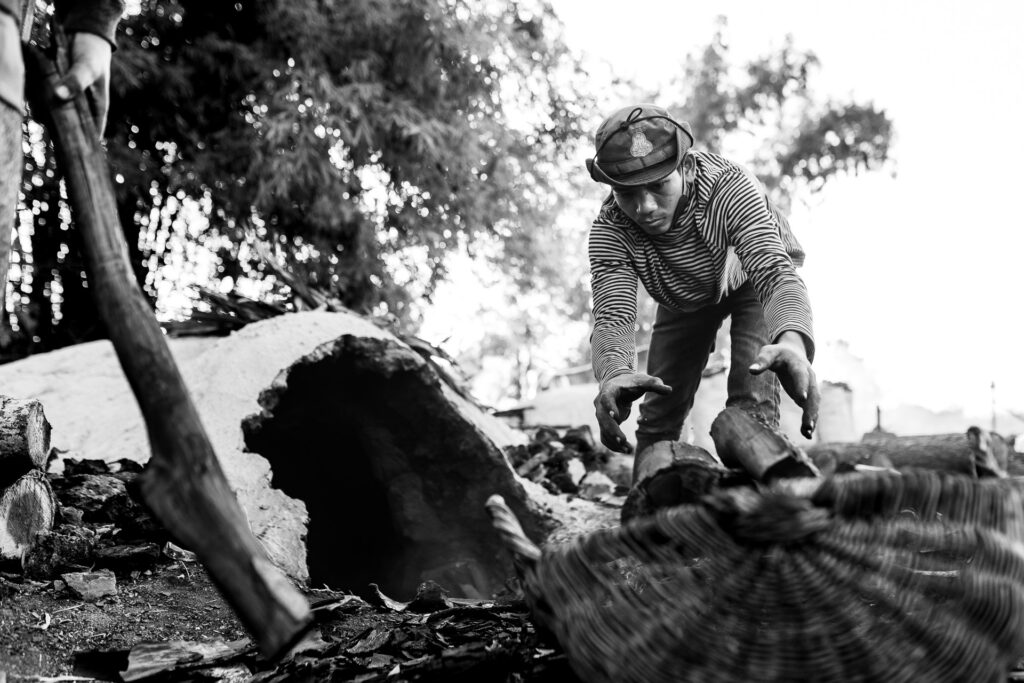
Now the story moves.
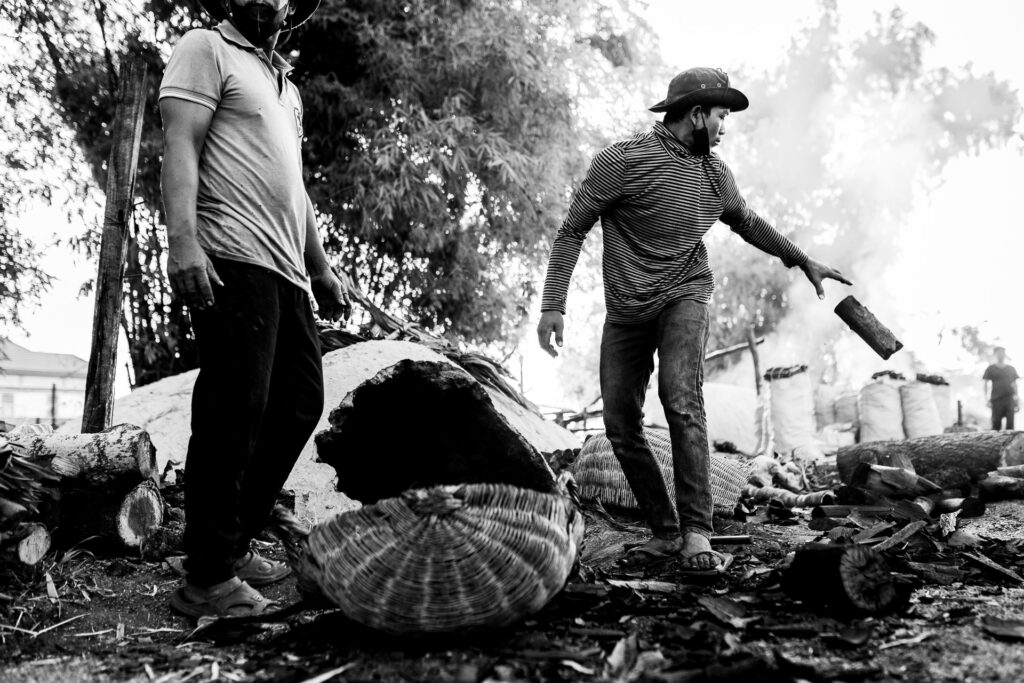
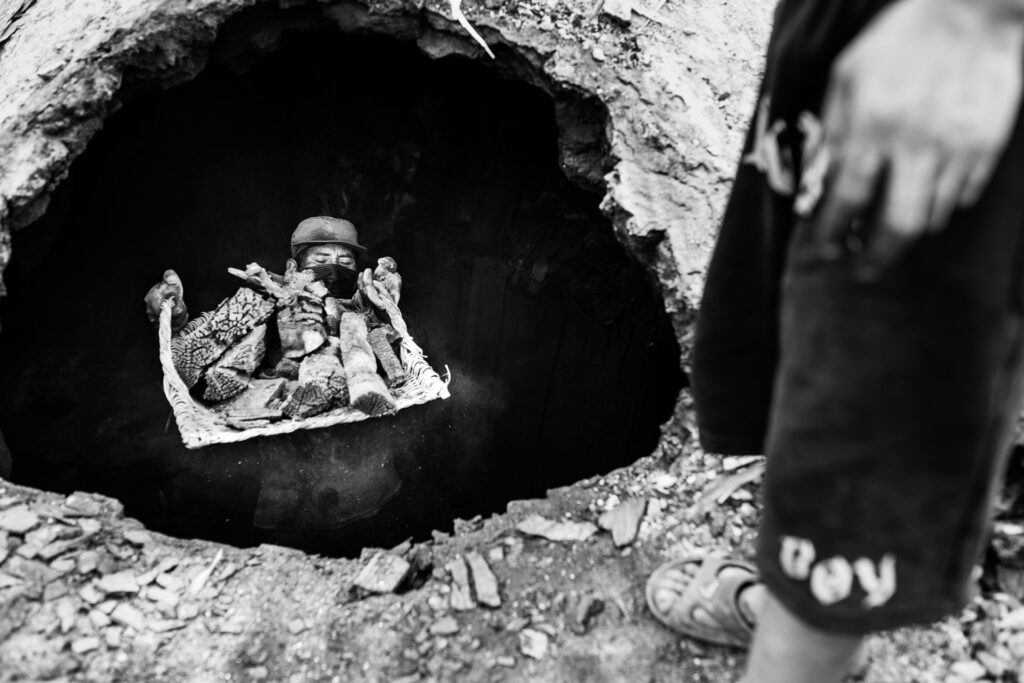
Action images explain what is happening:
- Digging charcoal from the earth
- Carrying heavy loads
- Feeding fires beneath the ground
These photographs bring rhythm and energy to the narrative and transform static portraits into lived experience.
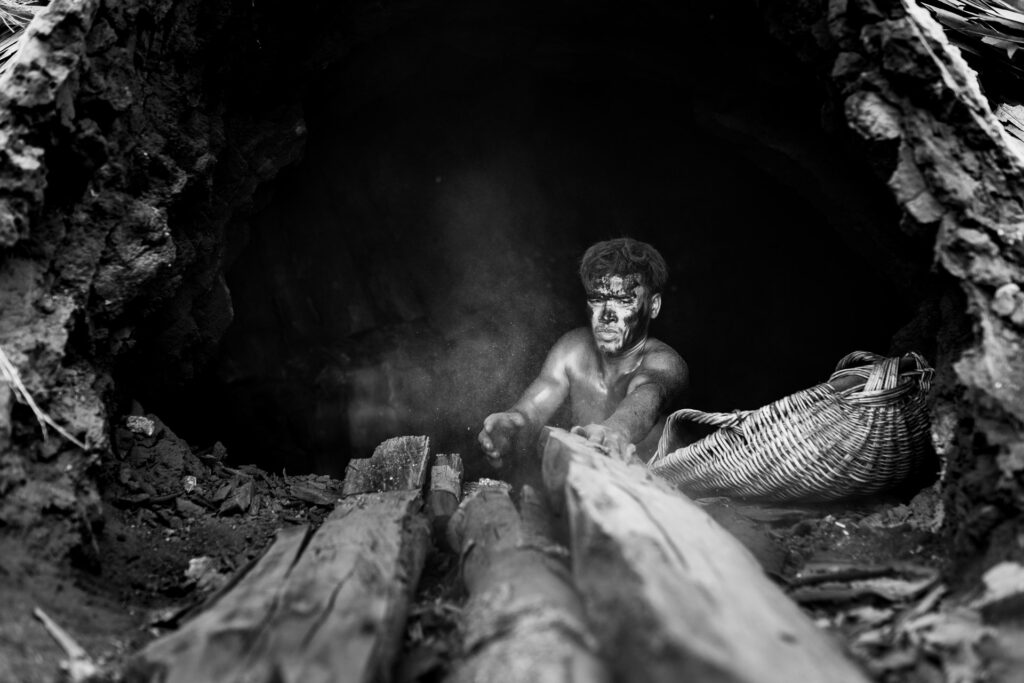
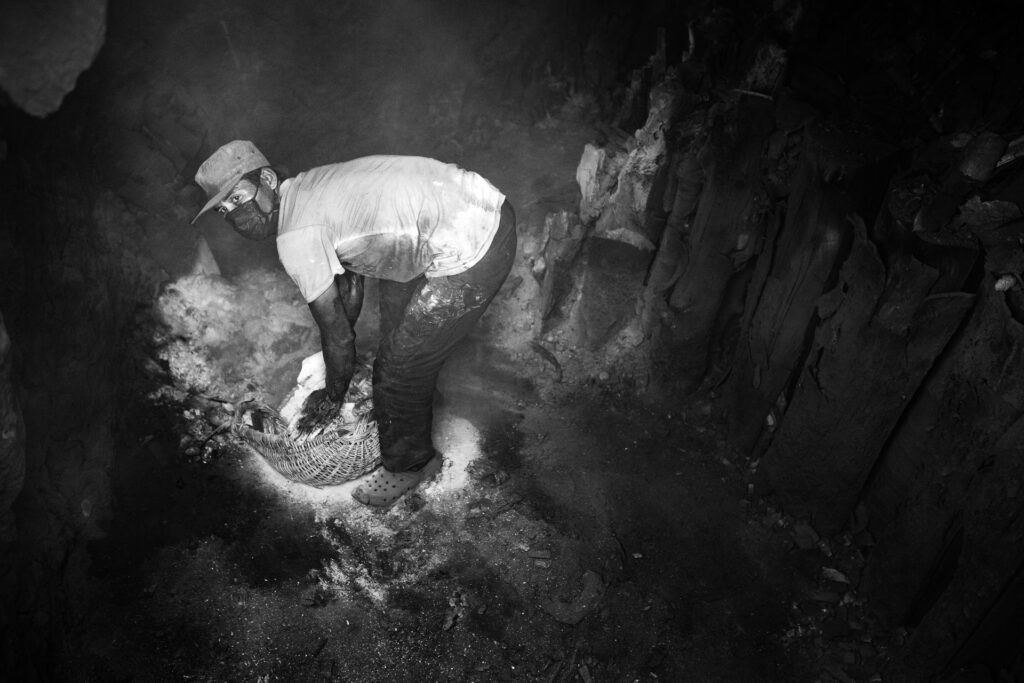
Tips for action shots:
- Observe before shooting
- Anticipate movement
- Use layers (foreground, subject, background)
- Let gestures and body language tell the story
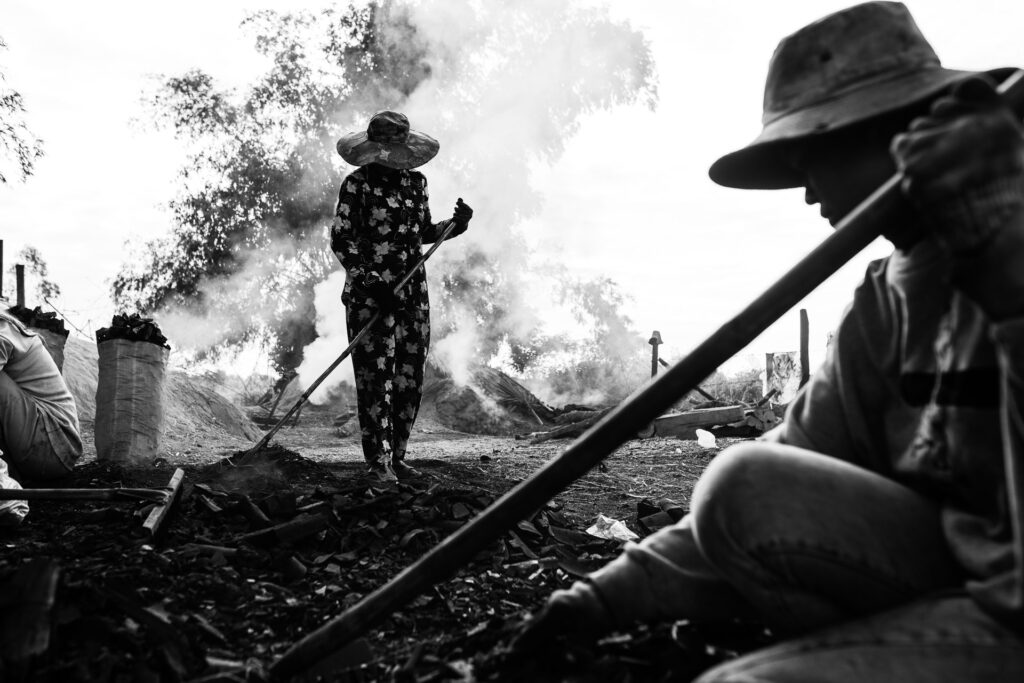
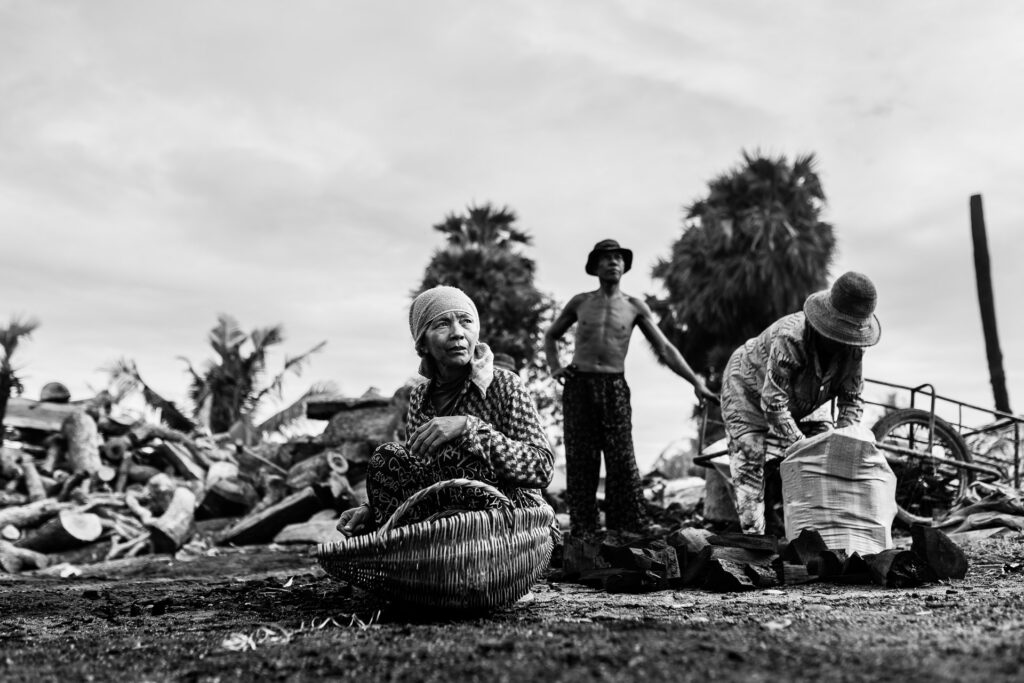
This is where light and composition become critical storytelling tools.
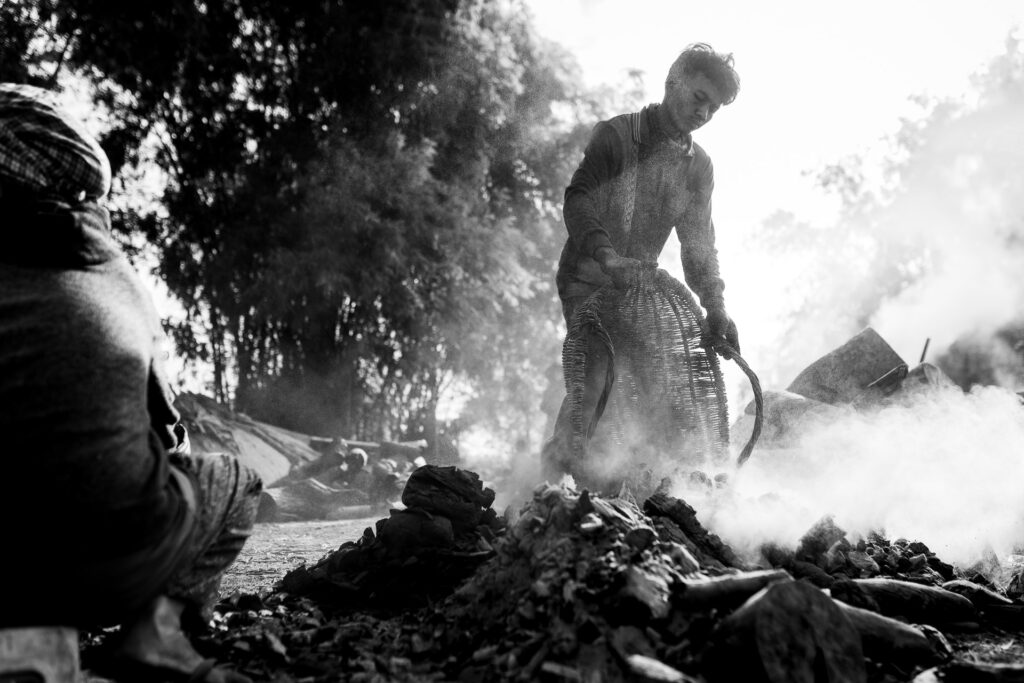
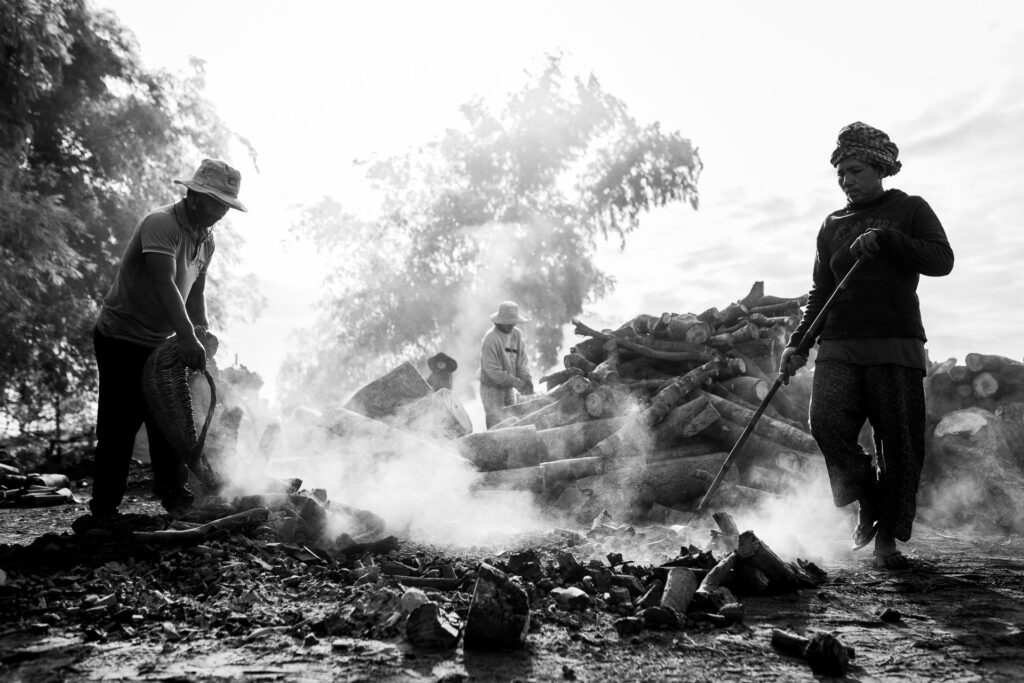
Step 4: How Do They Do It? (Details & Close-Ups)
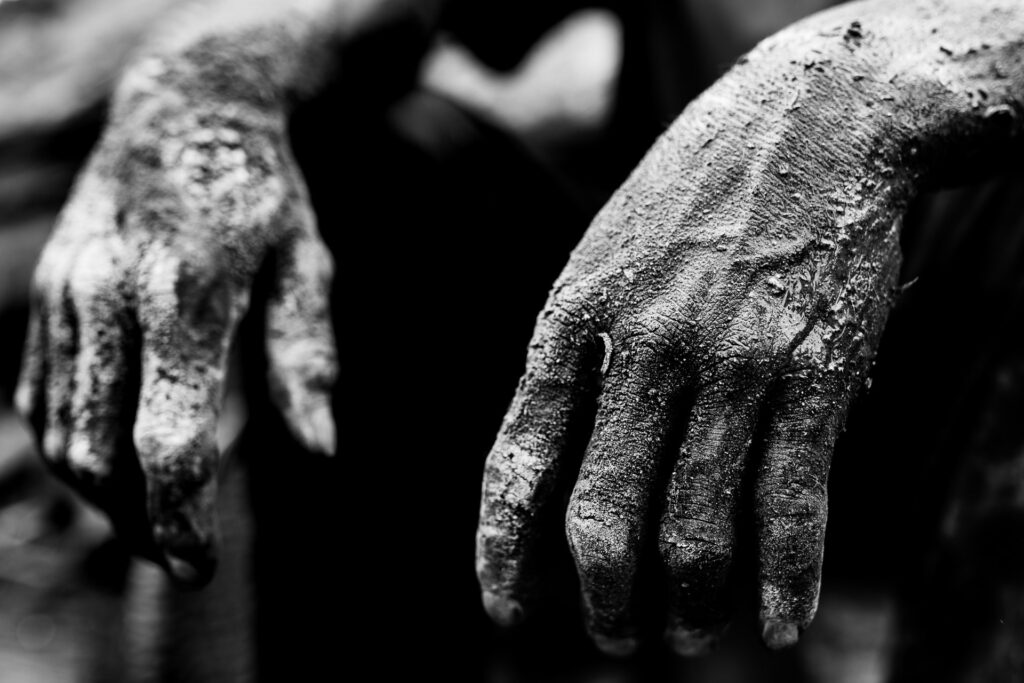
Details are where stories gain depth.
Blackened hands.
Worn tools.
Textures of dust, sweat, and smoke.
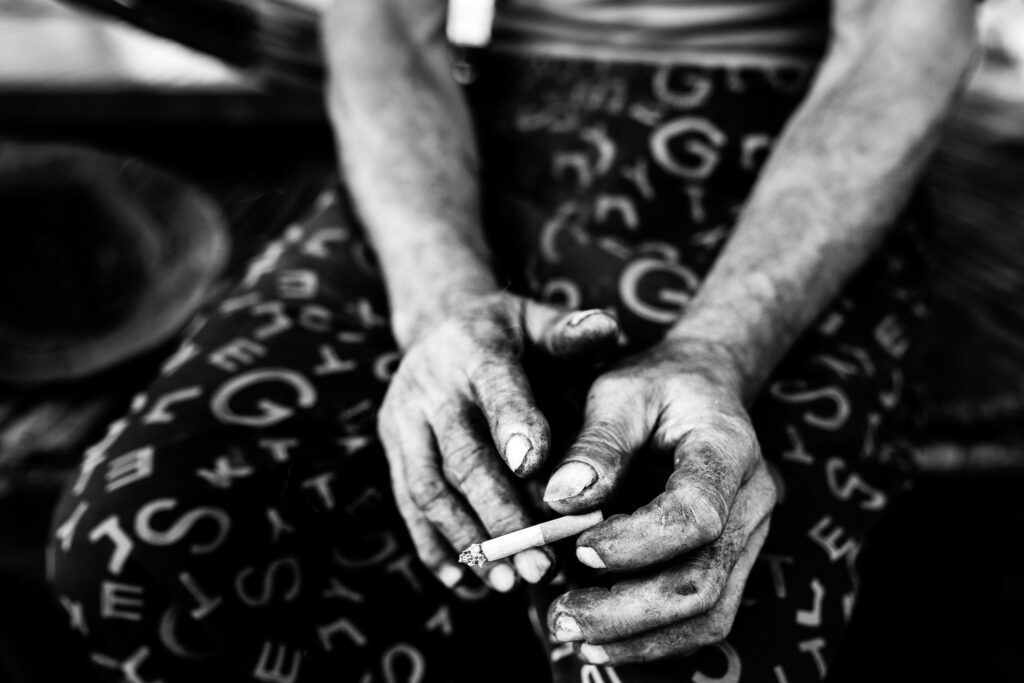
These images don’t explain — they suggest. They allow the viewer to feel the heat, weight, and physical effort of the work.
Tips for detail shots:
- Focus on hands, tools, textures
- Use shallow depth of field
- Look for quiet moments between actions
- Vertical images work especially well for magazines
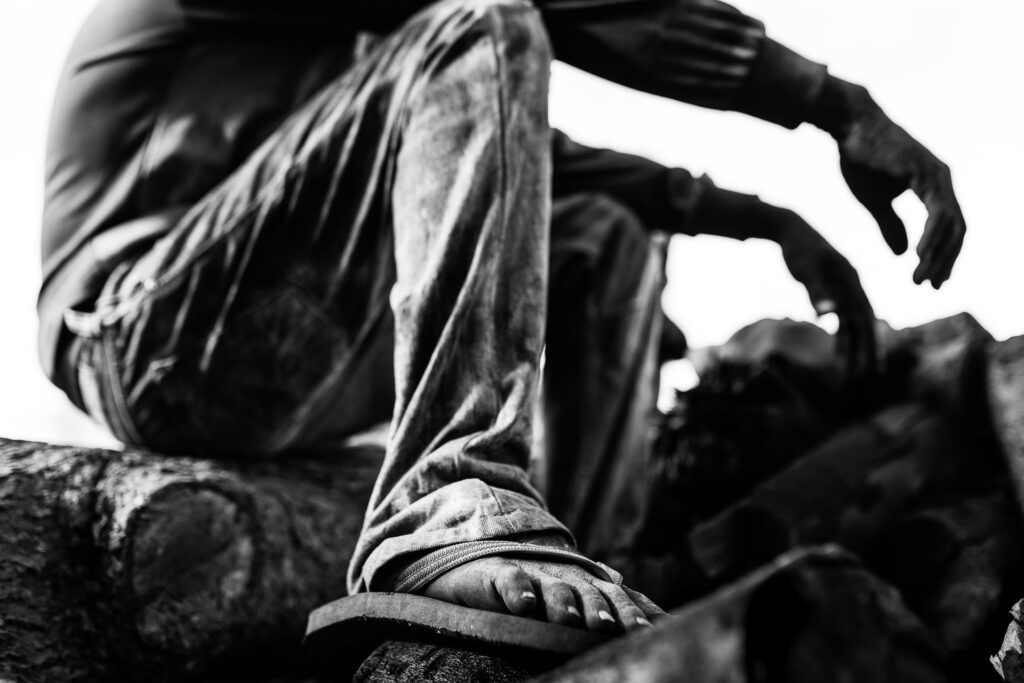
Editors rely heavily on detail images to give visual breathing space to a story.
Step 5: Why This Story Matters (Intention & Ethics)
Strong storytelling begins before the camera is raised.
When photographing people at work — especially in difficult conditions — intention and ethics are essential. Black Tears was created with patience, respect, and understanding:
- Time spent gaining trust
- Respect for daily routines
- No staging or exaggeration
- Avoiding stereotypes or visual clichés
As photographers, our role is not to take images, but to bear witness responsibly. This ethical approach is a fundamental part of our teaching philosophy.
Step 6: The Photographer’s Role (Observation & Patience)
Not every moment should be photographed.
Good visual storytelling means knowing:
- When to step back
- When to interact
- When to wait
Some of the strongest images come from observation and patience, not constant shooting. Learning to read light, rhythm, and human behavior is just as important as technical skill.
Step 7: How Does the Story End? (The Closing Image)
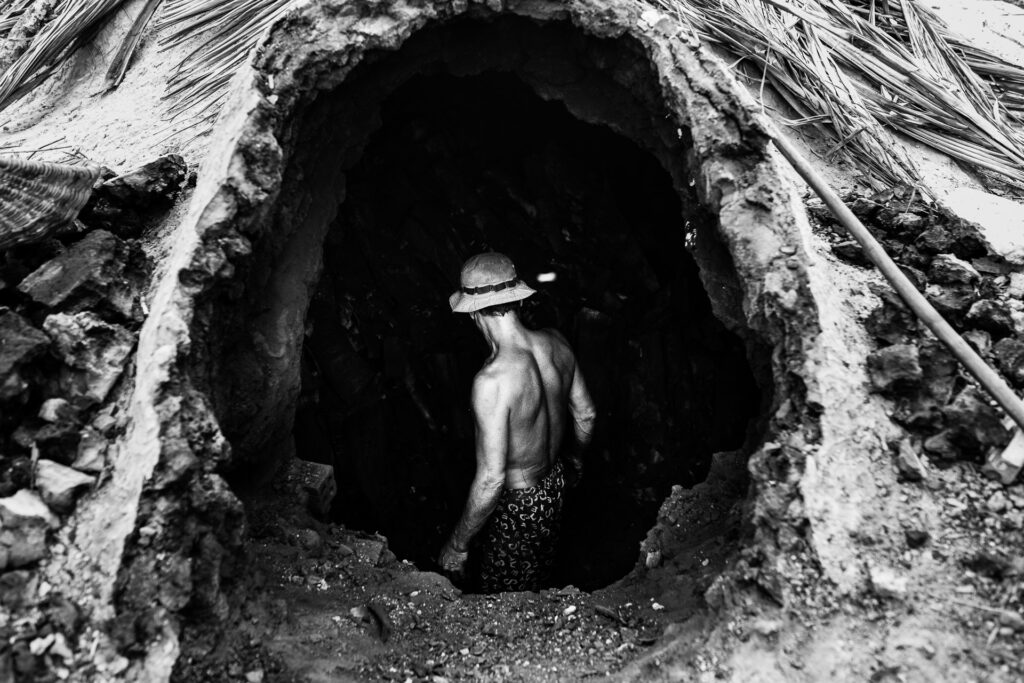
Every strong photo story needs an ending.
If the opening image sets the scene, the closing image invites reflection. In Black Tears, the final photograph is quieter, suggesting that the work continues beyond the frame.
A good closing image doesn’t explain.
It lets the viewer sit with what they’ve seen.
Editing & Sequencing: Building the Final Story
Storytelling doesn’t end in the field.
Editing is where the narrative truly takes shape:
- Select images that move the story forward
- Avoid repetition
- Build rhythm: wide → portrait → action → detail → pause
This is how photo editors think — and how photographers should think if they want their work published.
Light and Composition: The Invisible Storytellers
Subject alone is never enough.
In Black Tears, light and composition were essential:
- Soft morning light filtered through smoke
- Strong contrast between skin and charcoal
- Carefully balanced frames guiding the viewer’s eye
On our tours, we teach photographers to see light first, then compose — because storytelling depends on both.
More Than Beautiful Images
Our travel photography tours are not about collecting destinations.
They are about:
- Learning visual storytelling
- Creating meaningful photo essays
- Understanding people and place
- Developing editorial-level photography skills
Black Tears is one example of how travel photography can go beyond aesthetics and become storytelling with purpose.
Final Thought
A powerful photo story doesn’t happen by chance.
It is built — image by image — by asking the right questions and answering them visually:
Where are they?
Who are they?
What are they doing?
How do they do it?
Why does it matter?
How does it end?
When light, composition, intention, and respect come together, photography becomes more than images.
It becomes a story worth telling.
In this article, we have not included any vertical images, as it was created specifically for web presentation.